Vibe the Grind, Craft the Joy
Creating something new happens in two modes — grind and joy. Here is how I decide when to let AI vibe the grind, when to craft the joy myself, and when to commission another human instead.


Creating something new happens in two modes — grind and joy. Here is how I decide when to let AI vibe the grind, when to craft the joy myself, and when to commission another human instead.
At a Green Tech Hackathon in Zurich, three teammates and I built Simplon Off in a day - a small experiment in running right-sized, open AI models locally, on the laptop you already own.
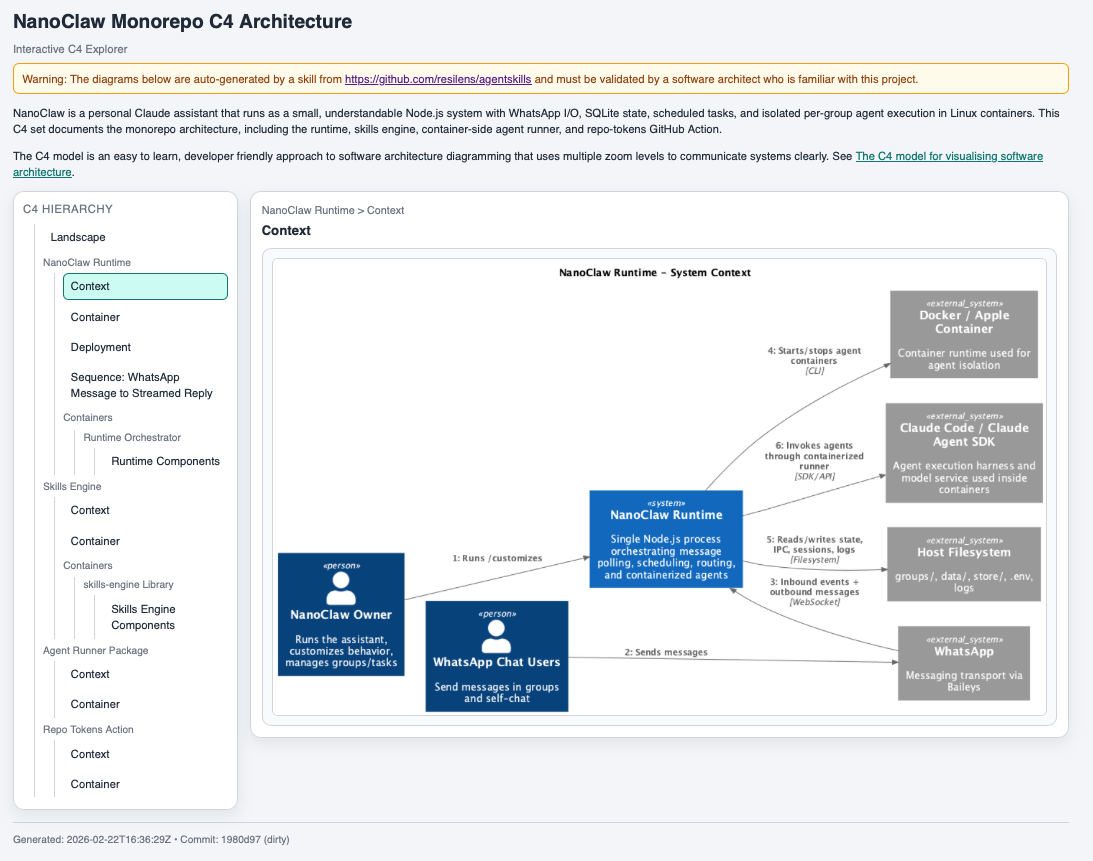
We’ll be dealing with a lot more code in the near future. Using AI to help people understand existing systems seems more useful than generating even more of it. I built an agent skill that takes any folder of code and generates C4 diagrams and a local interactive HTML explorer for architecture review
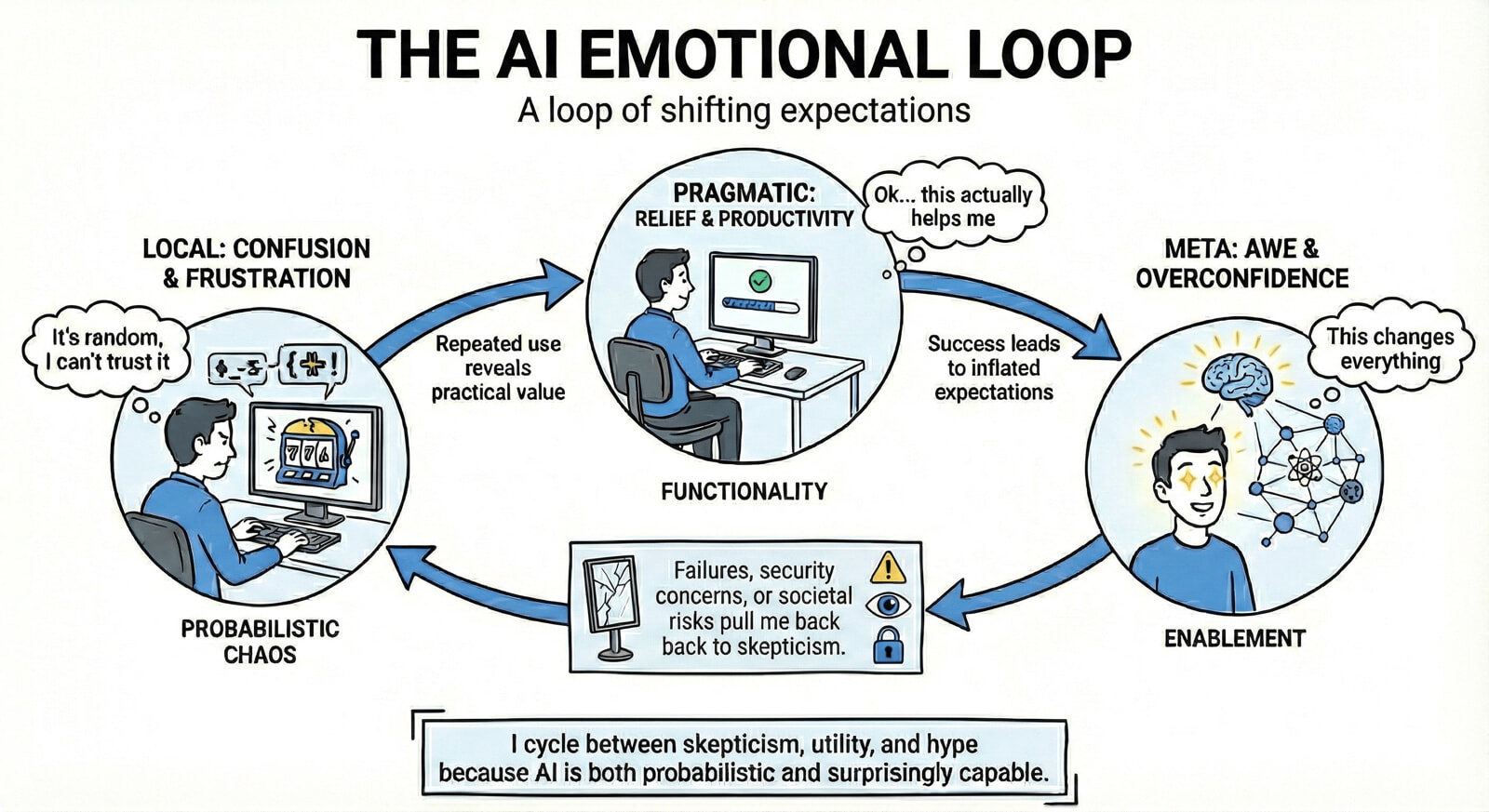
My perspective about AI swings between slot-machine chaos, mind-blown optimism, and Black Mirror dread. I turned that back-and-forth into an infographic about living in this emotional loop.
When someone proposes an idea to you, smile and assure them that you understand (yes ...). Express your enthusiasm about it (... yes ...) with an even bigger smile. Then, offer to enhance and extend their great idea (... and ...). You can compare this creativity technique to rubber duck debugging, but always remember that you should not replace a human with an LLM.

The post discusses AI hallucination - when AI generates incorrect information. It explores two main problems: user frustration with incorrect outputs and uncertainty about managing these errors long-term. Using a geodetic network analogy, it explains how AI errors can propagate like measurement errors in surveying, suggesting we need better frameworks for detecting and managing hallucinations.

In this experiment I used AI to automate architecture documentation by testing Aider (an AI coding assistant). After just 5 minutes and 5 prompts, I generated a decent C4 diagram for a Streamlit web application. While not perfect, this experiment shows the promising future of AI-assisted documentation.

"Playground" by Richard Powers explores the interplay of technological ambition and environmental concerns, highlighting tensions between progress and preservation through diverse characters on a remote island.

In 2025, research on the web involves using ChatGPT for specific technical queries while considering sources and environmental impact, as Google's search has become less efficient.
This article describes "star-collector," a tool for automatically publishing web favorites using GitHub Actions and AI-generated titles, leveraging transformers for title creation from Mastodon posts.
